Science · Culture · Communities
The Integral
Management Society
Custodians of the essential, architects of the next.

Contents · 18 entries
- A way to meet. A way to carry on
- Create capabilities. Keep them alive. Recognise those who made them possible
- It all began — and continues — with an encounter
- From naturalists’ journeys to complex systems
- Learning together, changing the environment, keeping the connection
- The question changes when the world changes
- Three fields of work. A shared way of learning
- Giving lasting form to what we learn together
- Trust needs visible rules
- Stewardship does not confer ownership
- Institutional memory must also be verifiable
- A society that learns in several languages
- An institution for encounter
- A living heritage
- Contemporary research and practice
- Institutional resources
- An ecosystem of capabilities
- Depth and continuity
A scientific society dedicated to understanding complexity, preserving essential capabilities and opening new possibilities for adaptation.
Understand the relationships.
Build what comes next.
The mathematics of encounter connects observation, models and decisions. Human Intelligence Debt and informational friction bring that enquiry into processes, systems architecture and artificial intelligence.
Human Intelligence Debt →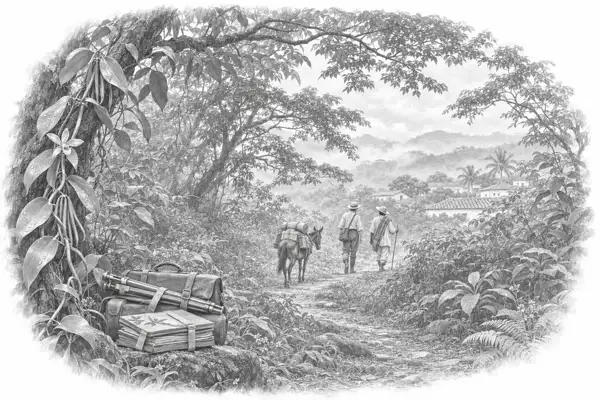
Some capabilities can be preserved in documents. Others live in the hands of a master, in a specialist’s judgement, in relationships of trust between communities or in the experience accumulated to address situations for which no known answer yet exists.
An inn that welcomes travellers and news. A workshop where traditions of different origins meet. An apprentice who becomes a master. A community that turns an internet access space into a school. A team of engineers learning to work with distributed systems and highly complex environments.
These are scenes from different times and places. They share a conviction: knowledge acquires its true value when it can meet other capabilities, be transmitted, be transformed and remain useful.
The Integral Management Society gives this vocation a contemporary institutional form. Established in Geneva as a Swiss non-profit association, it brings together research, preservation and cooperation through communities of practice, scientific initiatives and projects in the public interest.
Our mission is to understand complexity and facilitate adaptation for the people, communities, organisations and systems that face it. To do so, we cultivate the conditions for encounter, observation and cooperation that are needed when conventional frameworks are no longer sufficient.
We preserve what deserves to continue. We investigate what we do not yet understand. And we seek to ensure that every body of knowledge, every innovation and every contribution retains its provenance, its fair attribution and its ability to return value to those who made it possible.
Within its programme on complex systems and the operational integrity of AI, IMSV conducts research through Tegrity.AI. The programme documents work linked to FG-TIDA, the ITU-T focus group on trust and identity.
Crafts evolve. The connection endures.
Observe, transmit, organise and transform: different fields of work connect inherited knowledge with the capabilities we need to build today.
Precision as continuity
From watchmaking and optics to mobile engineering and automation: instruments change, while measuring, understanding and adjusting remain essential.
Work and knowledge →Logistics and orchestration
Mountain routes, petroleum management before 1938 and logistics work with PEMEX in the 2000s are distinct stages. They are connected by the need to coordinate people, resources and decisions.
Work and knowledge →Craftsmanship and savoir-faire
A century of jewellery work and experience with leading luxury houses connect material knowledge, precision and transmission. Stewardship of a craft also means allowing it to evolve.
Communities of practice →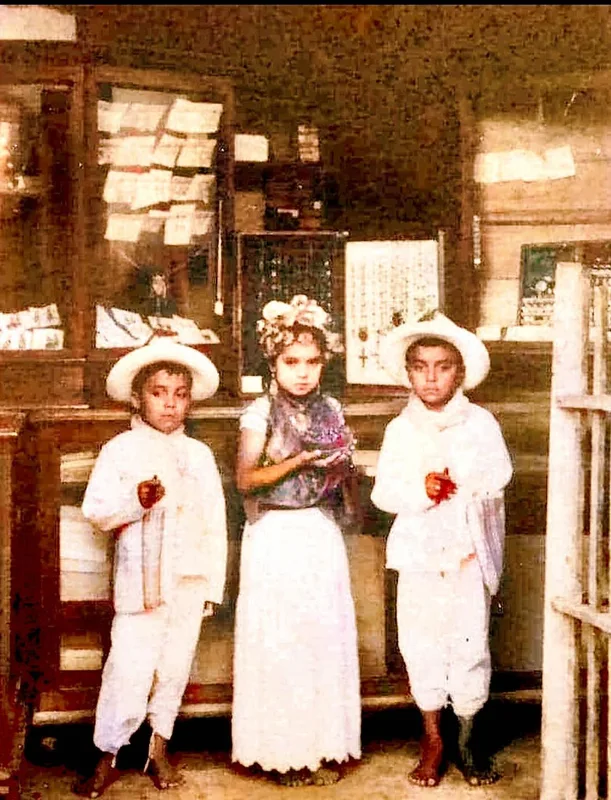
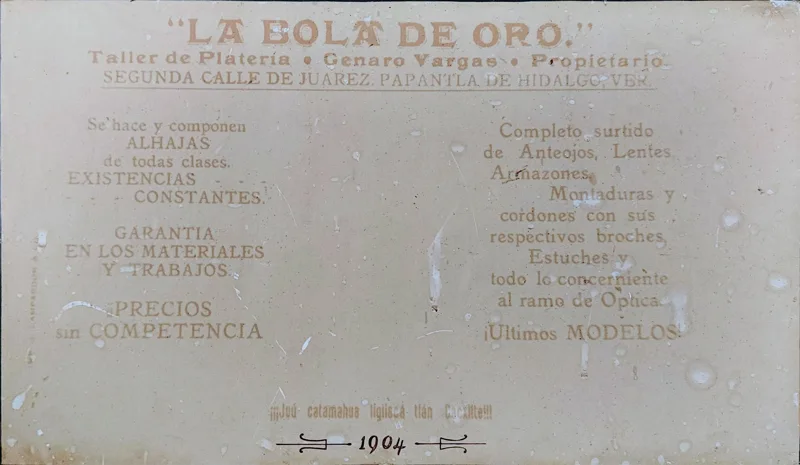
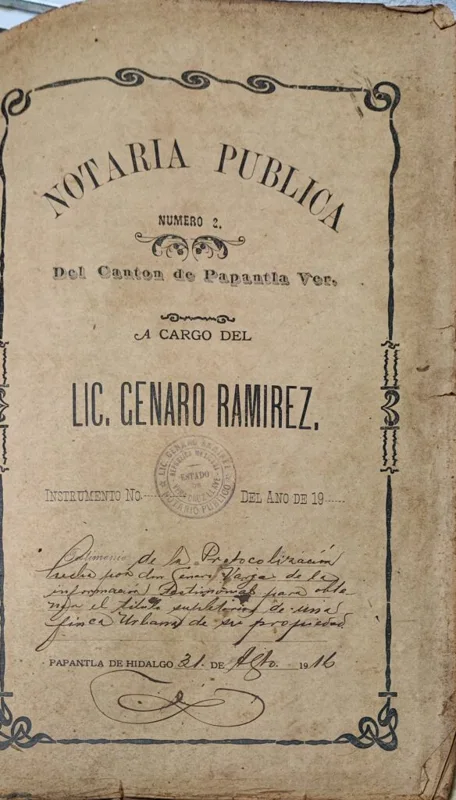
Archive and continuity
Photographs, workshop records and institutional documents connect people, places and practices. Explore a selection of authentic sources and their provenance.
Explore the archive →Transforming systems with people
From living knowledge to airports, the food industry and cities: sociotechnical transformation connects organisation, safety, learning and technology.
Work and knowledge →Carry knowledge. Create new connections.
The Maestrazgo, journeys by sea and crafts that cross borders offer a perspective on migration, return and entrepreneurship. Moving to a new place also transforms what we know how to do together.
History and continuity →A way to meet. A way to carry on
Our name expresses a way of acting, not three departments or a compulsory methodology.
INTEGRAL begins by recognising that no capability exists in isolation. A tool needs hands capable of using it; a decision, people willing to sustain it; an innovation, prior knowledge from which to learn. Integration brings these dimensions together without erasing their differences. It means working with the whole — people, communities, organisations, systems and territory — with respect for the provenance of knowledge and the consequences of our decisions.
MANAGEMENT speaks of responsibility in real situations. It is not about carrying a recipe from one place to another, but about first understanding the conditions: what works, what has been lost, who knows something we have not yet heard, and which risk changes when the context changes. We are interested in first principles, but also in prudence, cultural sensitivity and the diplomacy that enables cooperation across disciplines, generations and languages. A good management framework helps everyone play their part and learn from others.
SOCIETY recognises that some of the most fruitful work begins when people with different interests meet around a shared cause. From earlier exploration societies to contemporary research circles, a society creates conditions of trust in which to observe, debate, practise and transmit. It does not seek to own everything that emerges there: it seeks to let contributions grow, retain their identity and continue with those to whom they belong.
In practice, this means listening with equal respect to those who preserve community knowledge, practise a craft, conduct research or lead large organisations. Sometimes our contribution is to facilitate the right conversation, respect its timing and silences, and refrain from seeking the spotlight.
This is how we understand The Integral Management Society: an association that gives institutional continuity to a culture of encounter, cooperation and care for essential capabilities.
Create capabilities. Keep them alive. Recognise those who made them possible
The Society’s mission is to understand complexity and facilitate adaptation for the people, communities, organisations and systems that face it. We do not seek to impose a single model. We seek to create the conditions for knowledge to meet other knowledge, for capabilities to remain useful and for their contributions to be fairly recognised.
Three commitments sustain one another:
1. INNOVATION AND THE CREATION OF CAPABILITIES. Research, learn and design when circumstances call for something that does not yet exist or cannot be transferred without adaptation. Innovation did not arrive with the internet or artificial intelligence: it was already present in relationships among naturalists, artisans, travellers, masters and communities who had to solve new problems with different resources and kinds of knowledge.
2. ACTIVE PRESERVATION. Caring for what is essential means more than preserving a record. It means keeping open the possibility of practising a craft, passing on expert judgement, caring for a territory, preserving a language or rebuilding a relationship of cooperation. Communities of practice are how we keep that heritage generating life and capabilities.
3. PROVENANCE, FAIR ATTRIBUTION AND RETURN. Document who taught, researched, designed, maintained or transformed a capability. Distinguish ownership, custody, authorship and community contribution. Work to ensure that the value generated can return to the people and communities that made it possible, in accordance with the applicable rights and agreements.
These three objectives are not assigned to three departments: they run through research, culture and knowledge, and journalism and outreach. They are practised with respect, humility, responsibility, dedication, trust, cooperation and care.
No objective overrides the other two. Innovation without memory loses its foundations; preservation without practice can become static; both, without fair attribution, risk dispossessing those who contributed.
It all began — and continues — with an encounter
Long before we spoke of communities of practice, there were places ready to welcome people bringing questions, tools, news and different ways of understanding the world. An inn opened its doors; a workshop found a solution to an unexpected mechanical problem; a traveller learned from local knowledge and left some of their own. Exchange was not incidental there: it was a human infrastructure for learning.
The history of Totonacapan preserves some of those settings. We do not reproduce it here because it has its own documentary and institutional home. Our interest is in what connects that experience to a contemporary scientific community: the ability to welcome without absorbing, to learn without erasing provenance, and to offer each practice a place to meet others.
Today, an encounter may take the form of a technical meeting, shared research, a community school, a circle of specialists or a conversation between generations. Tools and distances change; the responsibility to create conditions in which someone can teach, ask questions and begin again remains.
- Community knowledge
- Crafts
- Research
- Organisations
From naturalists’ journeys to complex systems
A BRIEFLY NARRATED CHRONOLOGY:
- 1770
Eighteenth century, with references around 1770: the landscape of vanilla, botanical observation, travellers and territorial knowledge already required translation between worlds of knowledge. This is a historical context of practices, not a founding date for IMSV.
- 1870
Nineteenth century, with property documents attributed to 1870: ownership and uses left traces that help explain the continuity of the place. The precise relationship between each title and each activity is documented in the historical archive.
- 1898
1898: the documentary and operational continuity associated with La Bola de Oro, hospitality, services, workshops and crafts makes it possible to speak of a tradition of work and encounter sustained through political, family and technological changes. It does not mean that the same Swiss association has existed since then.
- 2005–2014
2005–2014: communities of practice explore internet-mediated learning and community education, bringing together experiences in engineering, information and international cooperation. Formación Integral finds new tools, without inaugurating a vocation for innovation that already existed.
- 2014
2014, New York: the expression “The Integral Management Society” gives a name to a perspective of integration developed through different professional and cultural experiences.
- 2024
2024, Geneva: the current Swiss association is established as a separate, non-profit legal entity; in 2026 it consolidates its institutional life, records and lines of activity.
This sequence connects earlier practices and assets with a contemporary legal constitution. It honours continuity without conflating legal entities. For the full history of the place, its custodians and its communities, we refer readers to the Institute; here we retain the institutional thread that explains why the Society exists.
Learning together, changing the environment, keeping the connection
FORMACIÓN INTEGRAL I. In the relationship between master and apprentice, some knowledge cannot fit into a list of instructions. It is transmitted through example, correction, time spent together and gradual access to responsibility. “Formación Integral I” is the analytical name we use today to describe that tradition, not the name of a formal programme in 1898.
FORMACIÓN INTEGRAL II. Between 2005 and 2014, work explored how to bring that relationship into community internet access and technology-mediated education, particularly in Totonacapan. Infrastructure mattered, but facilitators, the community, potential courses, visitors and the relationships that made access an opportunity to learn mattered even more. The working materials bring together a catalogue of more than seventy educational strands; that inventory must not be confused with seventy courses delivered in full.
FORMACIÓN INTEGRAL III. A new frontier asks how communities can use artificial intelligence and media literacy tools to learn, document and share knowledge without losing authority over their context. It investigates what it means to consent, attribute, correct and withdraw information when a tradition encounters new technologies. It has been presented as a proposal and developed in dialogue with governance forums; it must not be shown as a programme approved or selected by third parties.
All three formulations share a simple idea: knowledge is transmitted not by the presence of a tool, but by the human relationship capable of giving it meaning.
The question changes when the world changes
There are moments when familiar tools still work, but no longer fully explain what is happening. A team carries out its controls; a community maintains its customs; an organisation follows its plan and yet discovers that the conditions under which it made its decisions have changed. The response does not necessarily begin with another procedure. It may begin by looking at the problem differently.
Perspective Beyond is the name of an intellectual exploration of those limits: recognising the framework from which we observe, listening to knowledge that does not fit comfortably within it, and creating a perspective broad enough to integrate experience, judgement, systems and consequences. It is neither a universal technique nor a certification of results. It is an invitation to ask what we are failing to see and what capability we need to build in order to respond.
This enquiry runs through the Society’s trajectory: from encounters between crafts to experiences in complex technological systems. Today it connects with research on operational integrity, changing conditions and the limits of controls, whose technical developments have their own scientific spaces.
Three fields of work. A shared way of learning
RESEARCH. Explore difficult questions about systems, organisations, information and decisions. Tegrity.AI hosts a community focused on integrity and on pre-standardisation frameworks for artificial intelligence; its dedicated space presents the technical work, hypotheses and their validation status. Here we explain its institutional rationale and its relationship with the Society.
CULTURE AND KNOWLEDGE. Keep capabilities, languages, relationships between generations and communities of practice alive. The International Institute of Totonac Culture documents in depth the history of its places, knowledge and encounters. Its purpose is not to turn heritage into a static object, but to help its own participants keep practising and transforming it.
JOURNALISM AND OUTREACH. Investigate, tell stories, ask questions and connect human and economic experiences without losing the provenance of their voices. LatinoEmpresa connects editorial work with communities of practice and places of encounter.
All three fields investigate, preserve, innovate and take care over attribution. Each community has its own purpose, interlocutors, documents and responsibilities. The association brings them together and coordinates where appropriate, without erasing the identity or ownership rights of its members and collaborators.
LatinoEmpresa offers a visible example of this work across fields: alongside its interviews and reporting, it brings together migrant voices, entrepreneurs, professionals and communities from both sides of the Atlantic. Its fieldwork, observation and connections give context to the information it shares. Detailed accounts of each interview and event belong at https://latinoempresa.com/; here we focus on its institutional contribution to bringing people together and enabling their knowledge to circulate with recognisable provenance.
- Research — Complex systems, operational integrity and pre-standardisation.
- Culture — Preserving capabilities and living heritage.
- Journalism and dissemination — Publications, media and access to knowledge.
Giving lasting form to what we learn together
A community of practice is recognised by what it does: its questions, tools, people, care for experience and transmission of results. When it needs a stable institutional mandate, it may be organised as a Circulus Societatis within the single Swiss association. The Circle’s Charta defines its purpose, scope, responsibilities and relationship with the Society’s governing bodies.
Read the full text
Specific initiatives may emerge within a Circle, also documented through a Charta where appropriate, without turning every project into a new legal entity or an additional Circle. Mandates are recognised, reviewed and, where applicable, closed through governance procedures. Autonomy in the work coexists with shared responsibility for documents, attribution and resources.
Trust needs visible rules
The General Assembly and the Council sustain the association’s governance. Circles receive defined mandates; their leaders report on the work, document decisions and respect shared agreements. Meetings are not a mere formality: they are where a contribution is heard, a question is recorded, and an initiative gains — or loses — authorisation.
Read the full text
The Society seeks to make its governance principles, rules and current versions of its standards publicly available. This transparency does not entail automatically publishing every participant’s identity: respect for people, their consent and the protection of their data form part of the same institutional responsibility.
Stewardship does not confer ownership
The Integral Management Society is a Swiss non-profit association. Its resources serve its statutory purposes and the fulfilment of its mandates. It may cooperate with entities that have other legal forms and economic models, without conflating their assets, profits, contracts or intellectual property rights.
Read the full text
A community may contribute knowledge without surrendering it; a person may create a work whose attribution must be preserved; a Circle may hold materials belonging to several rights holders. We therefore document provenance, agreements, authorisations and responsibilities for use. Institutional custody seeks to keep a capability available, not to claim ownership that does not belong to it.
Institutional memory must also be verifiable
We work with identifiable documents: standards, versions, acts of approval or adoption, Chartae, minutes and reports. A working document may guide a conversation; only its current edition, recognised through the appropriate procedure, may be presented as an official text.
Read the full text
Several policies have been developed in cooperation with members and related entities and are designed to be expressly adopted by legally independent organisations. The Society may adopt those rules through the appropriate act and within the appropriate scope; a shared document does not erase the separate legal identities of its signatories.
Our document control distinguishes who proposes, who reviews, who approves or adopts, which is the authentic copy, and when one version replaces another. This system serves research as much as heritage: fair attribution requires knowing where a decision comes from and which text supports it.
A society that learns in several languages
French, English and Spanish are the official working languages defined by the statutes; French prevails for legal interpretation where applicable. Catalan, Totonac and Esperanto retain a place in our history and in the bridges we can build. We also use some Latin expressions — Circulus, Charta, Receptio — to name stable institutional functions, not as a fourth official language.
We share articles, reports, research texts and institutional documents with their date, status and provenance. Every publication should make clear whether the reader is looking at a current standard, an editorial explanation, a proposal or a result under review.
Anyone wishing to learn more, make a proposal, contribute or raise a question of attribution can begin with our contact point. Encounter remains the starting point; documentary rigour is a way to make it last.
Perspective Beyond / An entrance to the thought Atlas
Ideas in conversation with this page
The Integral Management Society — English
Open the map and explore its connections
The Atlas connects pages, ideas, experiences and sources. This map starts from the current reading and opens a path through its conceptual neighbours.
Select an idea to read what it contributes and how it connects. Lines also connect the readings with each other.
Work with your assistant
Copy the entry and give it to your assistant. Ask for an explanation, a comparison or an application to your own question.